Experience
Engineering the Indus
Sukkur Barrage, 1924–1927. The barrage is the monument; the evidence that survives is mostly of everything around it.

Islamabad, 1960 onwards. The plan and the city are two different objects, and holding them apart is what makes the comparison mean anything.
The research is done and published below. What is outstanding is the evidence and rights package: until every item can be shown with its own permission and citation, there is nothing here to enter. The record stands on its own in the meantime.
Be told when it opens — one line, no digest.
How did a planned capital move from intention on paper to a physical city, and where did later growth extend beyond the early planned footprint? The entry would place planning material beside observed material, with every state labelled planned or observed.
Planned. A drawing is evidence of intention and of the reasoning behind it. It is the strongest possible source for what was wanted, and no source at all for what happened.
The evidence is discrete — a plan, a site visit, a satellite pass — so the comparison would move between named states rather than interpolating between them. Synthetic annual precision is not available and would not be invented.
Publication permission for the planning material, high-resolution supply, and identified satellite keyframes. Until those are settled, no planned state can be presented as a record of what was built.
Experience
Sukkur Barrage, 1924–1927. The barrage is the monument; the evidence that survives is mostly of everything around it.
Experience
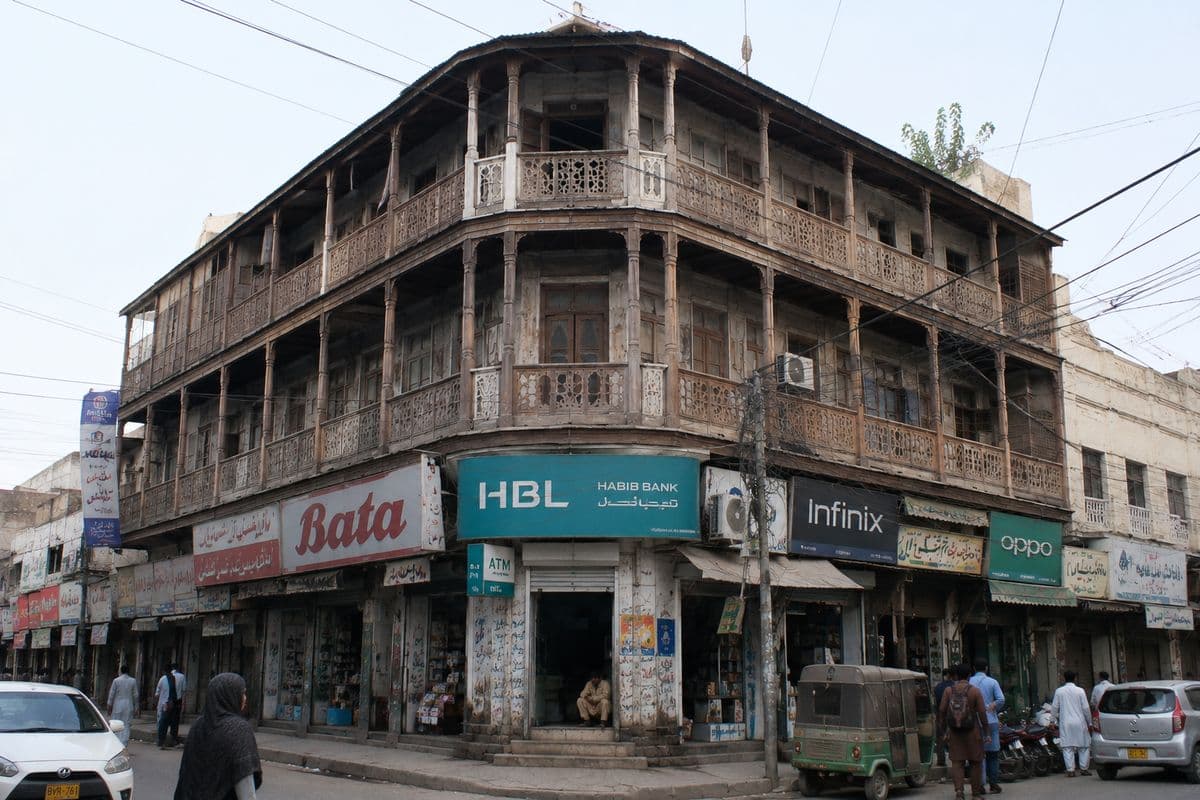
The same wooden-balconied corner building, photographed twice. Move between the frames and the difference is entirely in the ground floor.
Experience
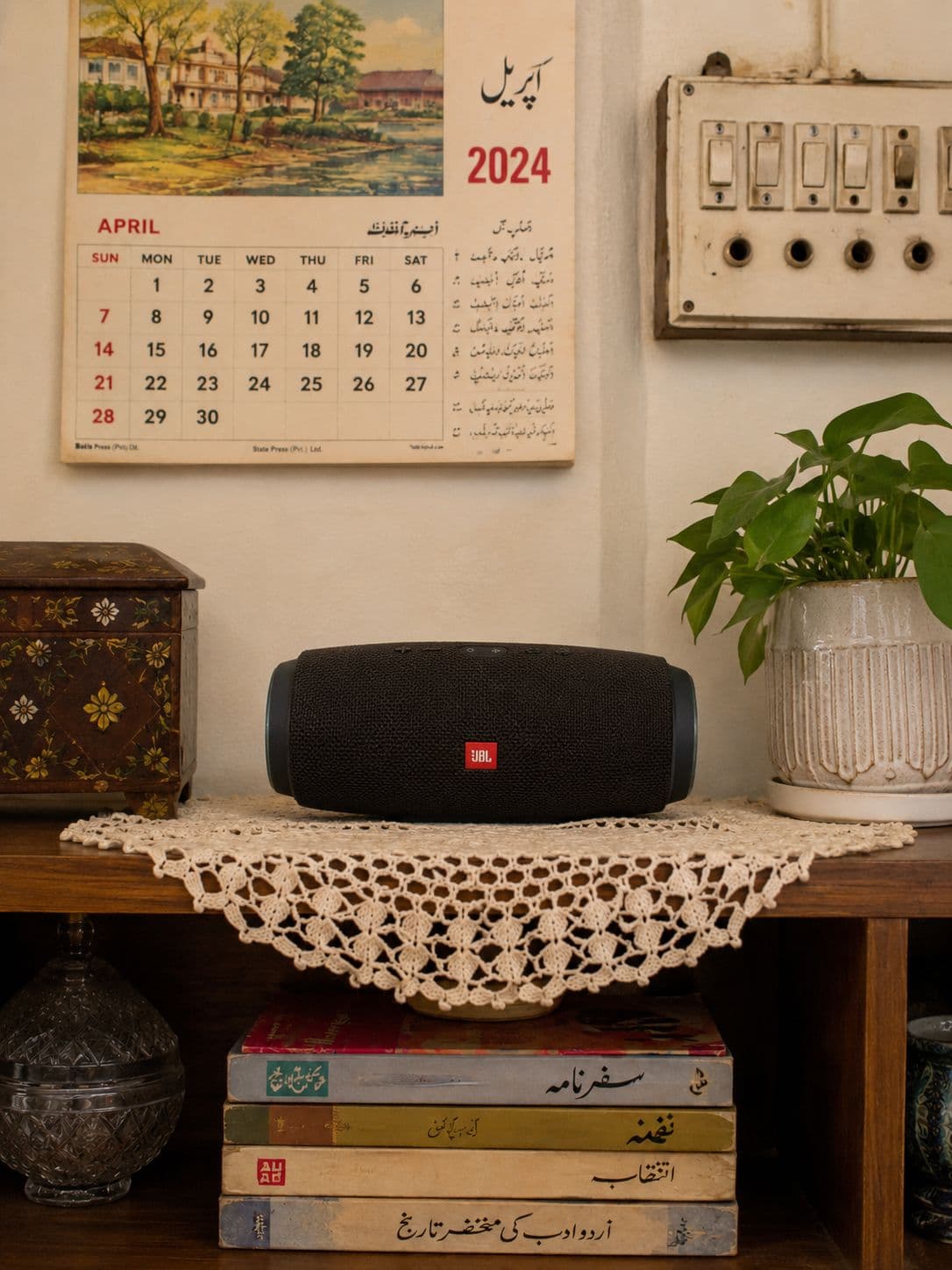
One shelf, two frames, and a calendar in each that reads April 1978 and April 2024.