
HistoryArchaeology
Cultural exchange along the Silk Road
The Silk Road was a network of routes connecting China to Central Asia, South Asia and the Mediterranean, active for nearly two thousand years. Goods travelled along it — but so did religions, languages, art and ideas. Pakistan sat at a critical junction of that network.
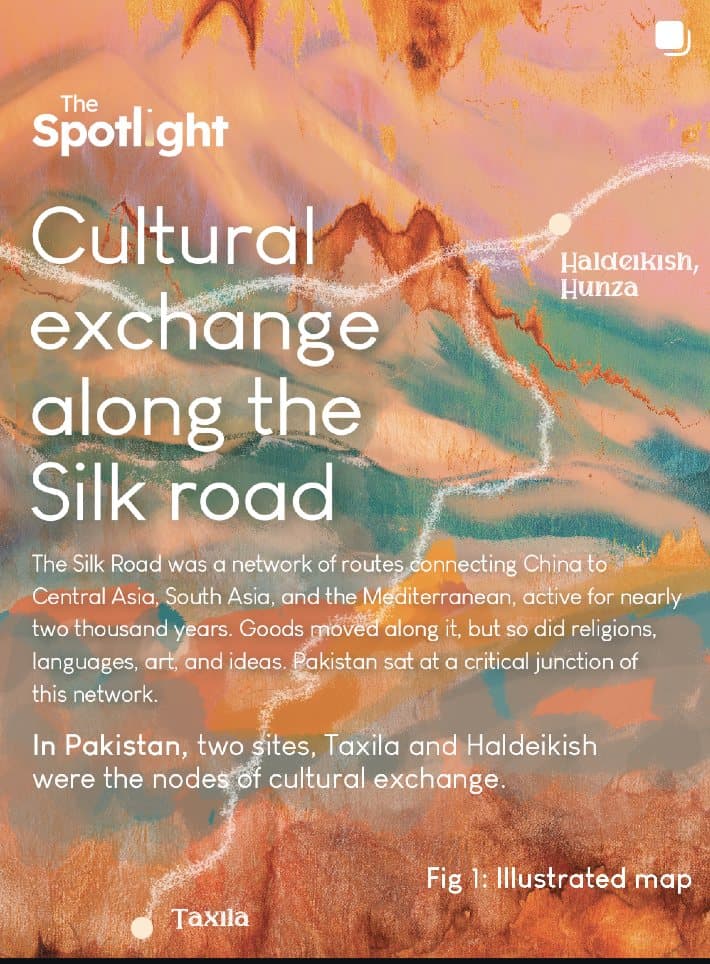
Trade routes were never only about goods. They moved scripts, recipes, coins, devotional images, techniques and ways of imagining the world. In Pakistan, two sites stand out as nodes of that exchange: Taxila and Haldeikish.
Taxila as a meeting room
Stone, learning, empire and pilgrimage gathered in a place that still reads like a conversation between worlds. Taxila was inscribed as a UNESCO World Heritage Site in 1980; its Dharmarajika stupa and the monastic ruins at Jaulian are among its clearest visual identifiers.
The mountain inscription
A carved mark can be a signature, a prayer, a boast or a proof of travel — sometimes all at once. The rock carvings along the upper Indus record centuries of people passing through and deciding to leave something behind.
The point is not to romanticise old routes, but to notice how porous culture has always been.
Stay up to date with our monthly drops
Sign up for our Khabarnama newsletterKeep reading
Story
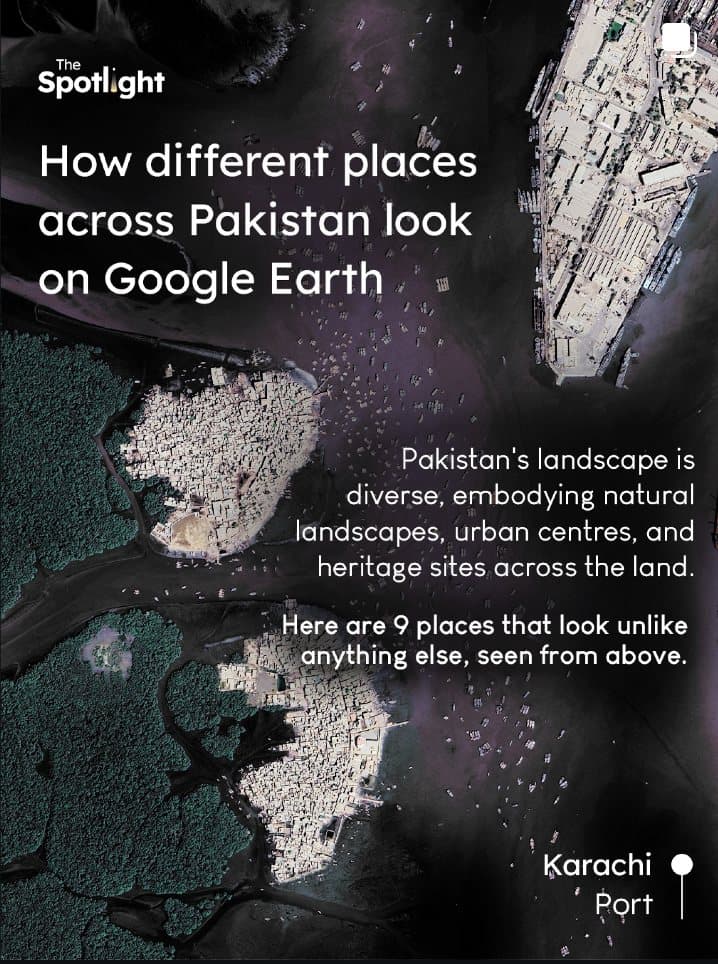
How different places across Pakistan look from above
Nine places that look unlike anything else when the view moves straight up.
Archive
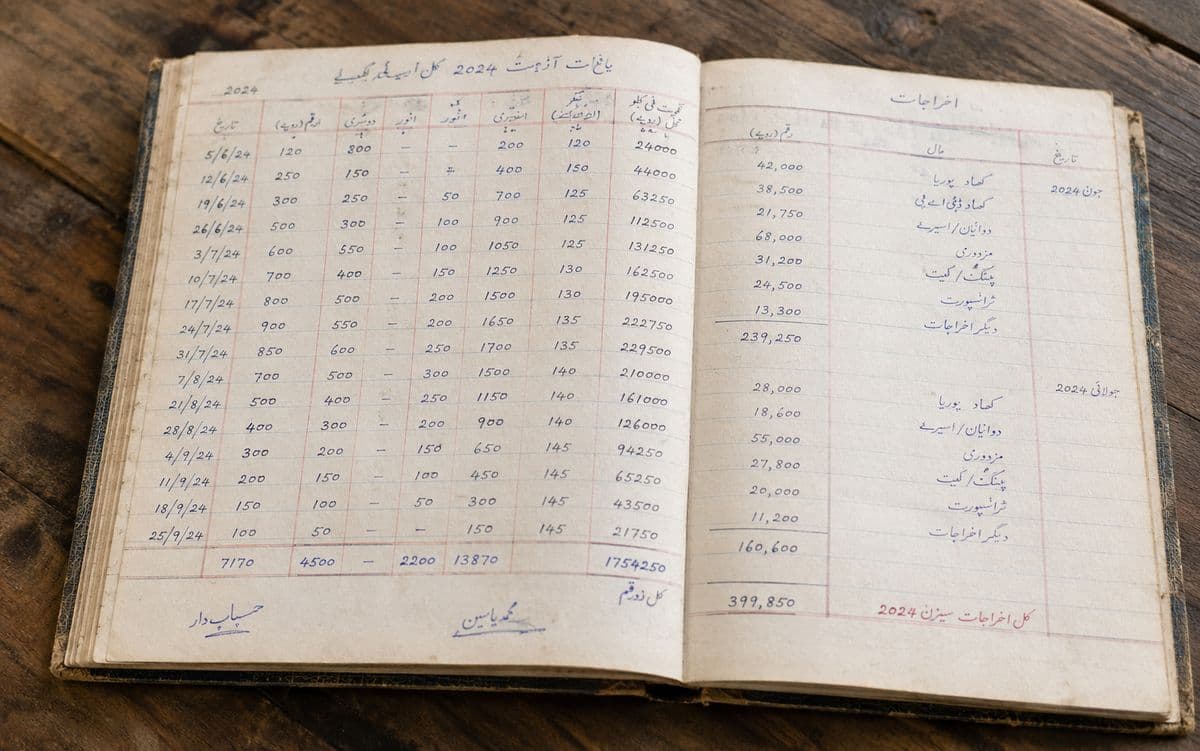
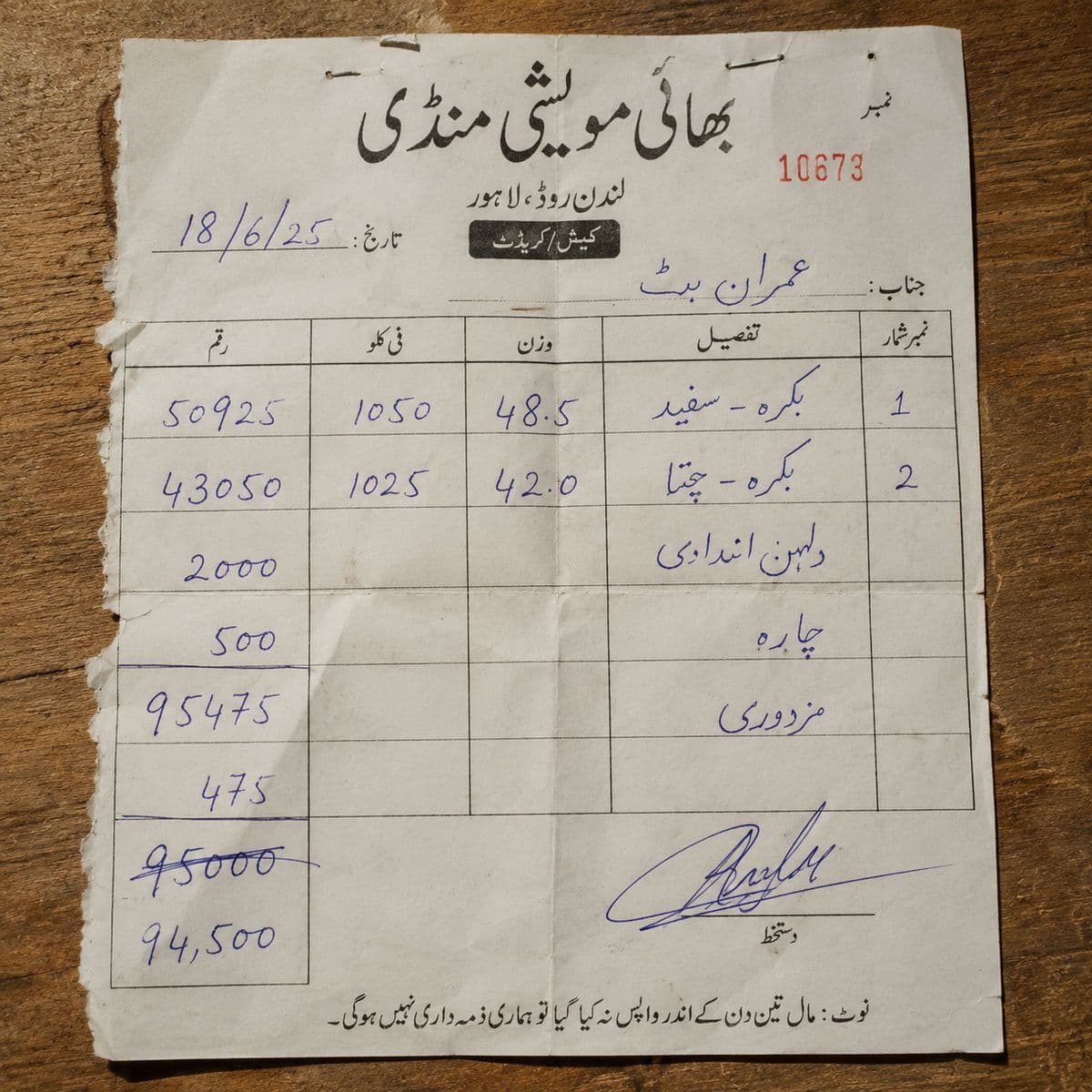
A mandi receipt
Weights, rates and a running column, written out by hand at the point of sale.